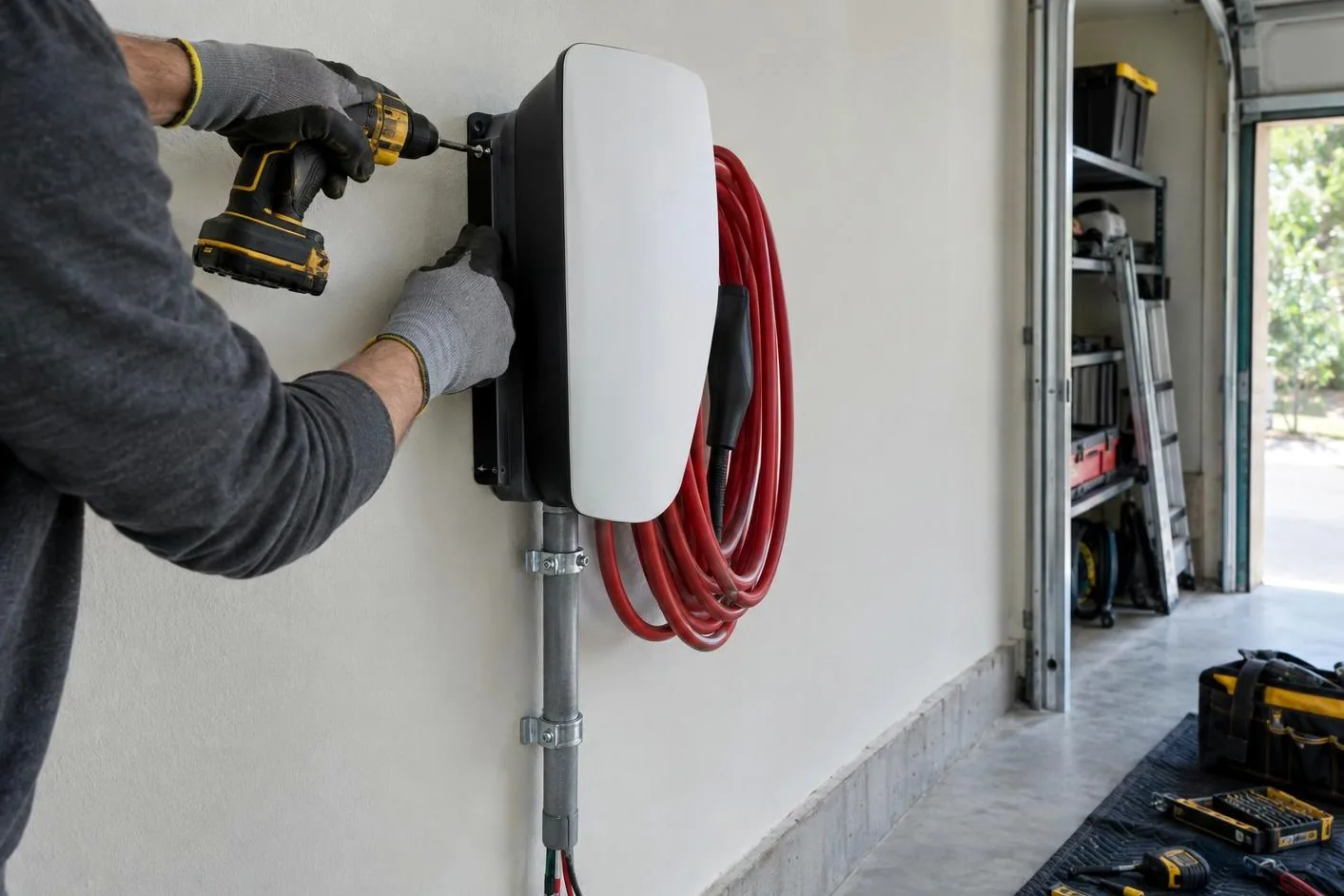
Apex garages often hold more than one Tesla, and that changes the plan. A lone Wall Connector reaches its full 48 amps, about 11.5 kW, only on a 60-amp breaker of its own. Two or more can share that circuit through Tesla power sharing, which splits the current and keeps the total inside the breaker's limit.
When a Tesla parks beside a Rivian or a Genesis, the Universal Wall Connector charges both, because it holds the Tesla connector and a J1772 adapter in one unit. We mount it where both ports can reach, pair it with Wi-Fi and set up scheduling in the Tesla app. Firmware updates then arrive on their own.
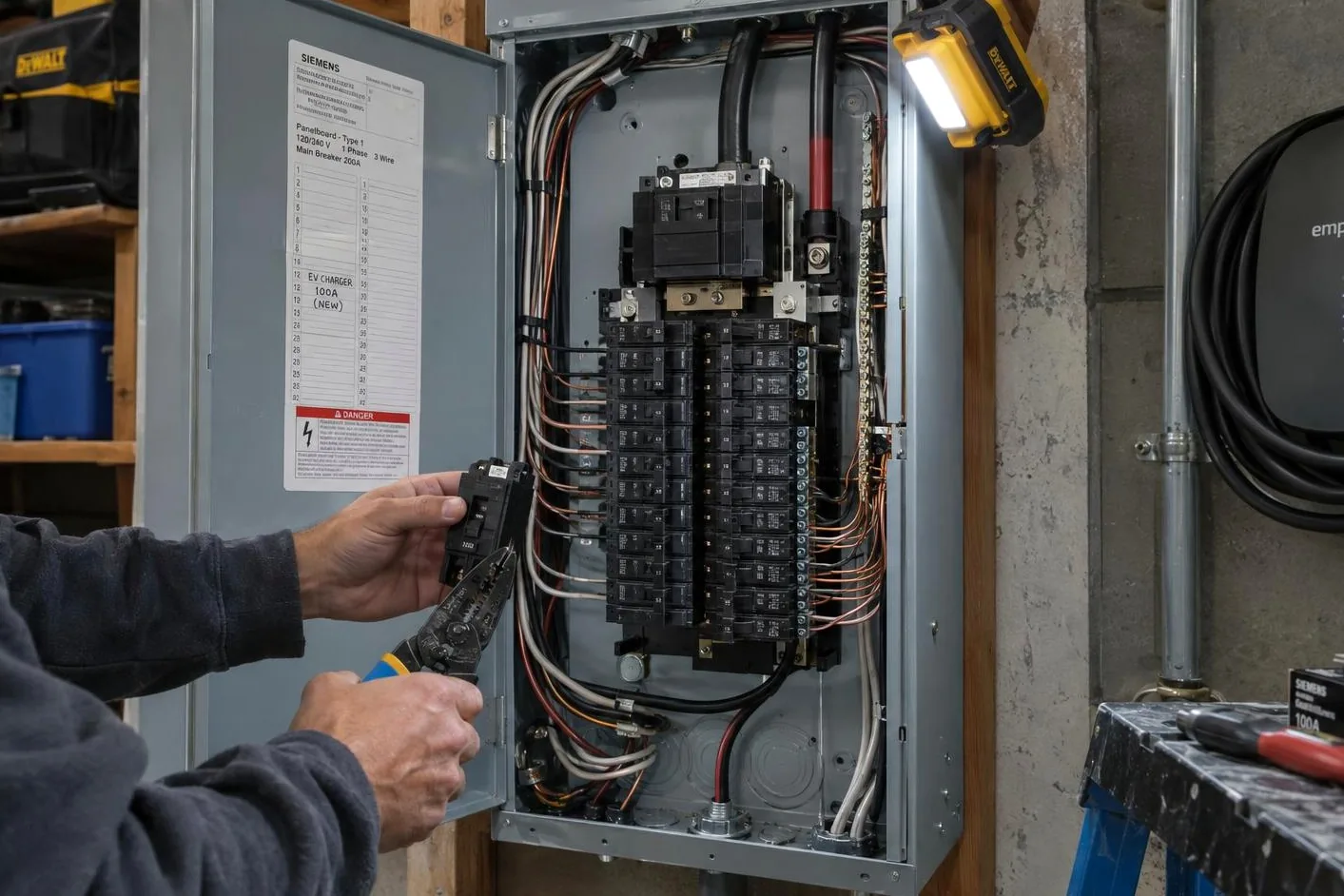
About seven in ten Apex homes were built in 2000 or later, and newer homes mostly carry 200-amp panels with room to spare. One charger rarely needs panel work here. Two chargers, plus a heat pump, an electric range and a dryer, can be a different story. That combination is where most Apex panel questions start, and it is why we count every large appliance before quoting.
A load calculation at your estimate settles it. If the numbers are tight, load management or power sharing usually solves the problem long before anyone talks about a subpanel or new 200-amp service. Your quote lists each option with its own price, making the savings easy to compare. Duke Energy customers can also put the Charger Prep Credit toward qualifying panel work.
Level 2 Charger Installation for Any EV
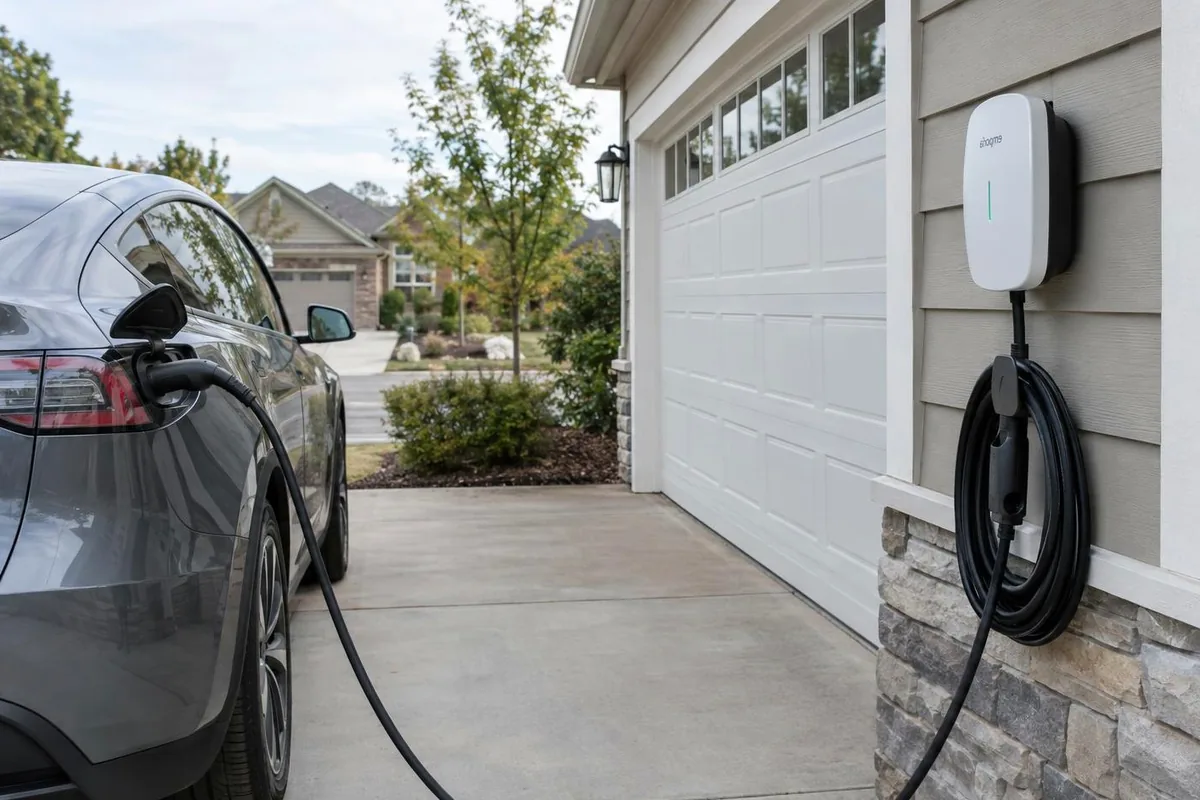
Level 2 charging puts back 10 to 30 miles in an hour, while a wall outlet manages only 2 to 5. Apex commutes average about 25 minutes each way, and a drive to downtown Raleigh and back is about 28 miles. That round trip takes 5.5 hours or more to refill on 120 volts, and roughly 1 to 3 hours on Level 2.
We install Wallbox, ChargePoint, Emporia, JuiceBox, Ford and Rivian chargers, on a plug or hardwired, inside the garage or out on the driveway. Pick your charger once the panel has been checked, so the amperage fits the house as well as the car. A Genesis GV60 and a Tesla Model Y draw differently, and the circuit should match the car you own.
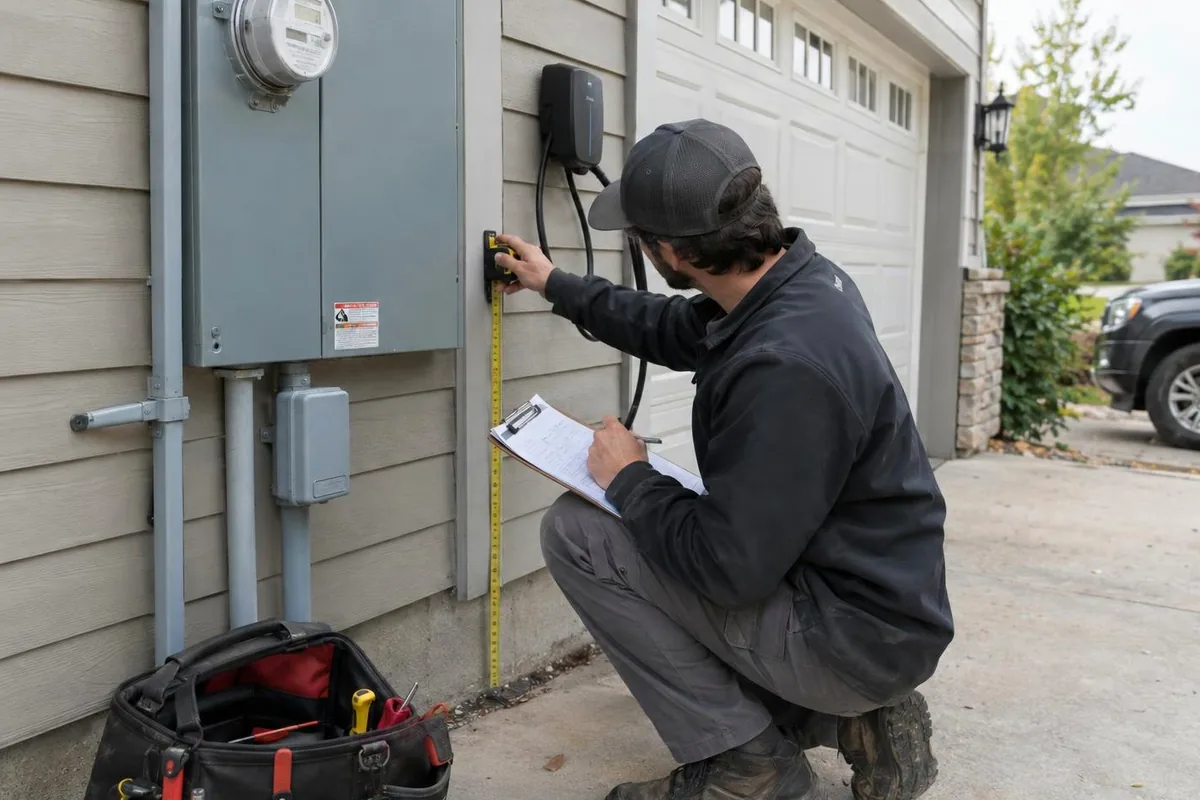
NEMA 14-50 Outlet for Plug-In Chargers
A NEMA 14-50 outlet is the plug-in option, a 240-volt receptacle on its own breaker for your car's mobile connector or a portable unit. A plug-in setup is simple to use, and the portable charger comes with you if you move. Many owners start here and step up to a hardwired unit later on the same wire run.
Hardwiring takes over above 40 amps, which Duke Energy requires for larger chargers. Each outlet gets its own dedicated circuit, rather than sharing a dryer line, and goes close to the car so no cord crosses the floor. The breaker is sized to the outlet, which keeps a portable charger from tripping it overnight.
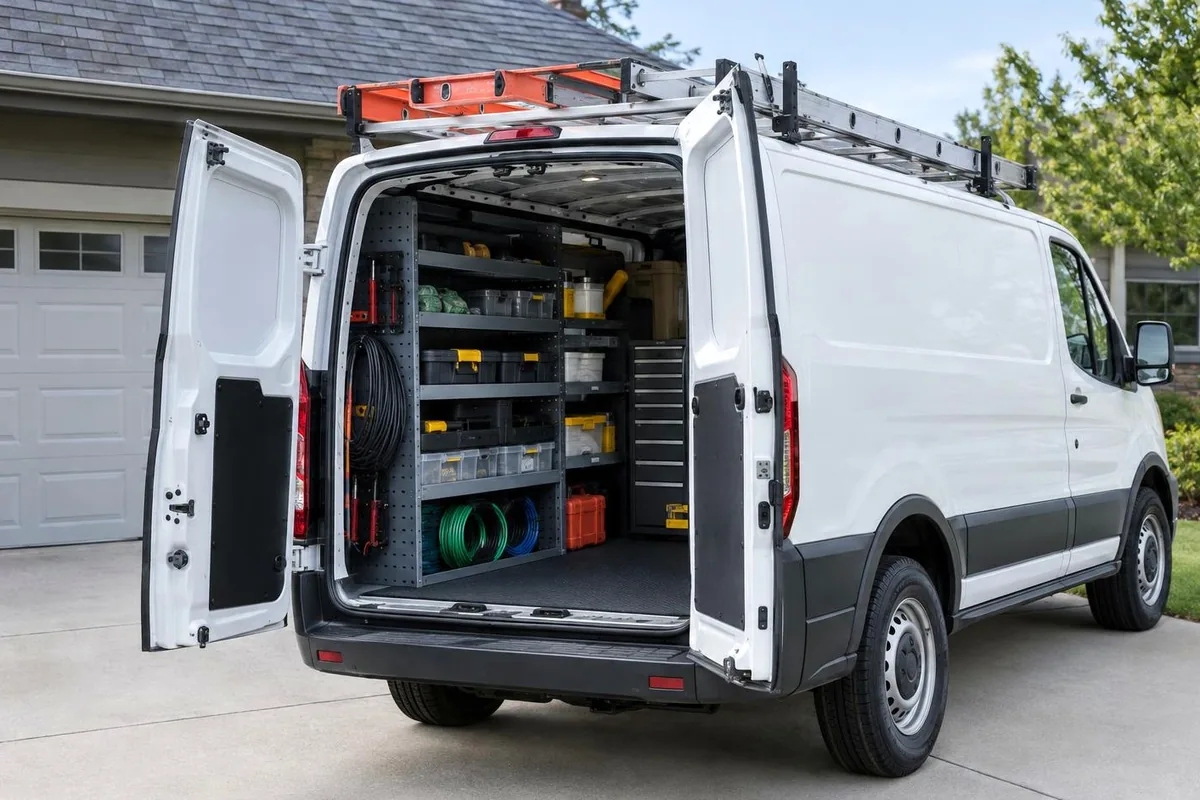
Power Sharing Setups for Two EVs
Two cars on long commutes cannot both refill overnight on wall outlets, so a two-EV household needs a real plan. If a second EV is coming, we design for both cars at the first visit, so the first charger never has to move.
Under Tesla power sharing, as many as six Gen 3 units can be wired to one circuit. Mixed-brand garages use load management or a second breaker when the panel has room. Either way, both cars start the next commute with plenty of range on a typical overnight schedule. With both plugged in, each car charges at a reduced rate, and a long overnight window makes up for it.
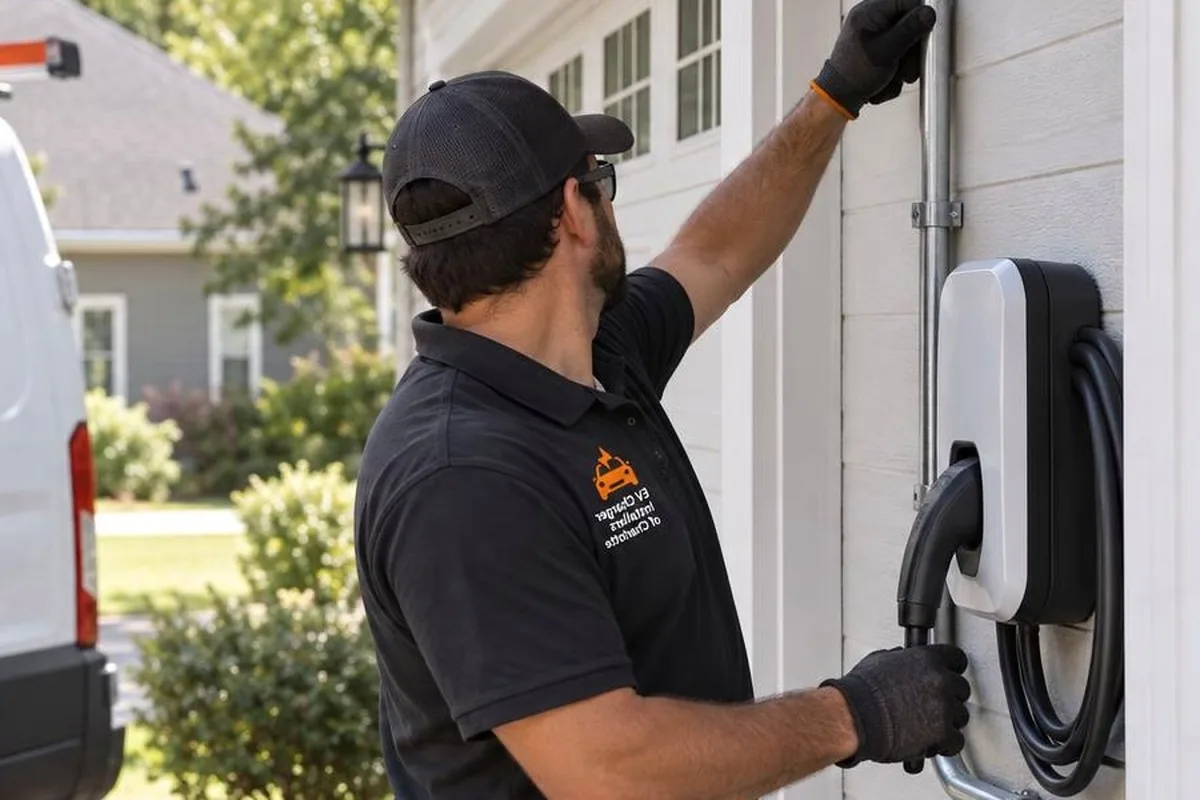
Outdoor and Garage Wall Mounts
An attached garage close to the panel makes for a short wire run and a tidy install. Driveway and carport parking work too, with a weather-rated charger and conduit run from the panel. A Wall Connector, ChargePoint or Emporia unit rated for outdoor use is built for year-round outdoor use.
Outdoor mounts remain eligible for the Duke credit, provided the circuit starts at your own panel. We set the charger where the cable reaches the port without crossing a walkway, and on brick we allow extra time for masonry anchors.